
The bedding edit · Winter fabric guide
If you like a fuzzy sheet surface on a cold evening, flannel or flannelette may be worth considering. The useful detail is the brushed surface, but the fibre content, fabric weight and care instructions still need checking before you buy.

01 / Winter fabric guide
What gives flannel its fuzzy feel?
Brushing lifts fibres from the woven surface to create a nap. That changes what you feel against your skin compared with a smooth, unbrushed sheet. The result appeals to people who dislike a sleek first touch in colder weather.
The words flannel and flannelette do not remove the need to read the composition. Check whether the product is cotton or a blend, whether its surface is described as brushed on one or both sides, and any stated weight. Compare the selected item rather than assuming every brushed sheet is identical.
A knitted jersey sheet can also feel soft, but its looped structure is a separate construction. Feeling like a T-shirt and having a fuzzy nap are different preferences.
02 / Winter fabric guide
Consider the practical advantages and limitations
| You may appreciate | Check before choosing |
|---|---|
| A soft, fuzzy surface at bedtime. | Whether you actually prefer nap to a smooth fabric. |
| A relaxed appearance without a crisp finish. | Whether the weight and drape suit your bed. |
| A dedicated option for cooler conditions. | Your complete bedding warmth, including the quilt. |
| A different feel from your usual sheets. | Care requirements, lint and permitted drying method. |
A brushed surface can be less appealing if you already sleep warm or dislike fabric with visible nap. Do not assume a heavier sheet is automatically more comfortable. The right choice depends on the room, other layers and your preferences.
03 / Winter fabric guide
Compare weight, fit and contents
If a product states GSM, that is grams per square metre: a fabric-weight measure. It is different from woven thread count. Weight can help compare similar brushed products, but it is not a universal warmth or quality rating across different fibres and constructions.
Measure the mattress with its usual topper and protector, then compare width, length and total height with the fitted-sheet specification. Check the selected depth suitability rather than relying on a general size label. Winter toppers or underlays can change the required depth.
Read pack contents as well. A fitted sheet only, a flat sheet only and a complete set solve different needs. If you prefer a familiar bottom sheet, adding one compatible top piece may be enough.
04 / Winter fabric guide
Care for the surface without overcomplicating it
Follow the product’s own wash and dry instructions. Sort colours appropriately, leave room for movement and avoid washing sheets with abrasive items or exposed fastenings. Use detergent according to its instructions and the load conditions, rather than assuming more will improve the result.
Some brushed fabrics can release lint or develop pills with friction and use. Check the manufacturer’s guidance before using a fabric shaver or other treatment. Do not promise yourself a permanent pill-free surface based on fibre content alone.
Dry completely before remaking the bed or putting a winter set away. If you rely on a dryer, confirm it is allowed before purchase and maintain the machine as directed. Keep an alternative set ready when cool weather makes drying slower.
Fabric construction
Brushed and knitted are different
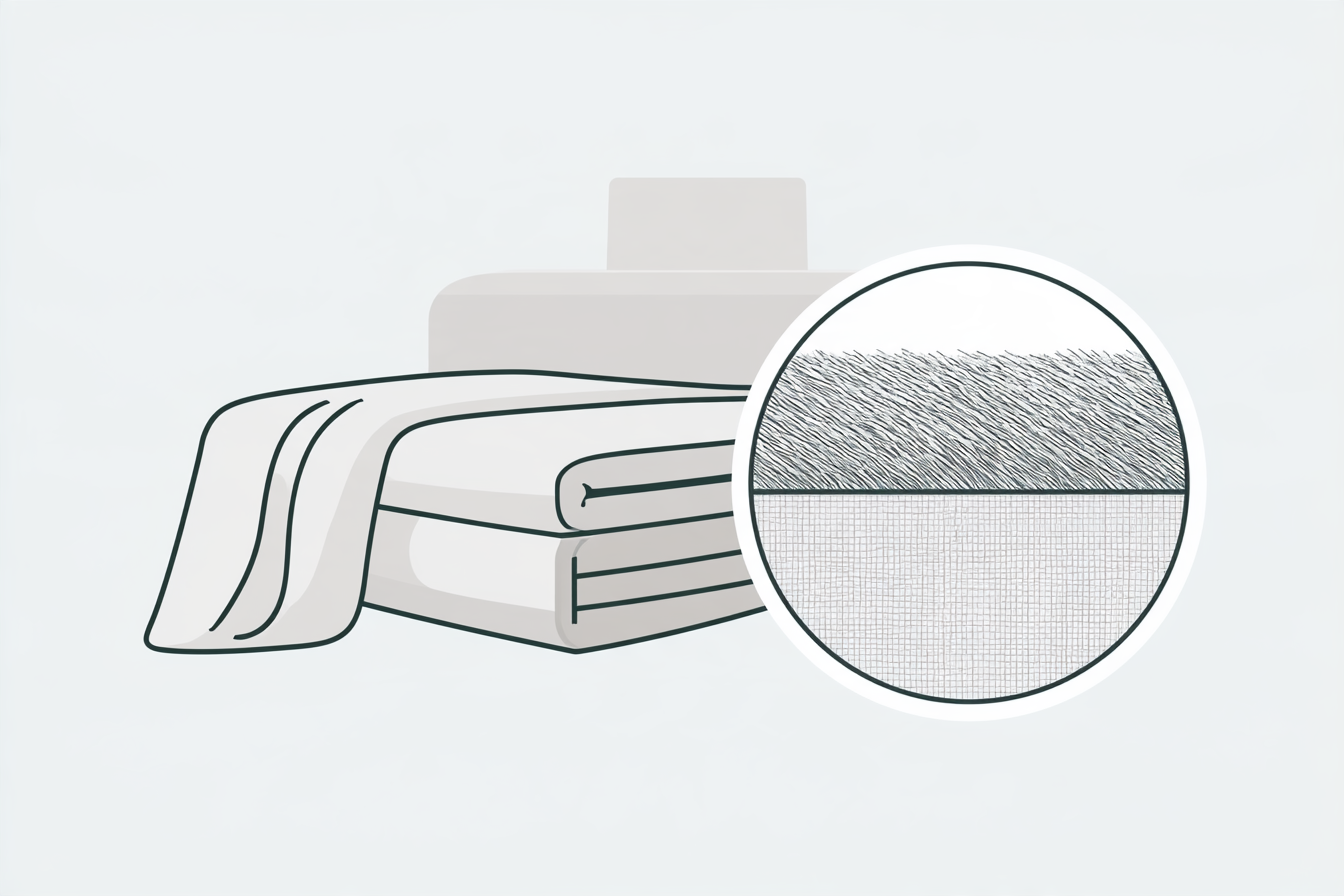
Woven fabric with a brushed, raised surface.
Knitted loops create a different surface and feel.
Read fibre content, dimensions and care.
Choose the surface you like; construction names do not replace the specification.
Common questions
Are flannel and jersey the same?
No. Flannel is a brushed woven fabric; jersey is knitted. Both can be made with cotton, but their surfaces and structures differ.
Is all flannelette 100% cotton?
Do not assume so from the name. Check the full composition of the actual product and any blend percentages.
Is a higher GSM always warmer or better?
GSM measures weight per area. Use it to compare similar fabrics alongside construction and your preferences, rather than as a universal rating.
Can I tumble dry flannel sheets?
Only if the care label permits it. Follow the stated setting and avoid applying a general rule to every brushed fabric.
Compare your preferred sheet surface
Browse current sheet specifications, or compare a knitted jersey alternative. Check the selected fabric and contents.