
The bedding edit · Material comparison
Linen and cotton can both make enjoyable bedding, but neither name identifies one fixed feel. A useful comparison starts with the actual composition and construction, then asks which surface and care routine you would prefer to live with.
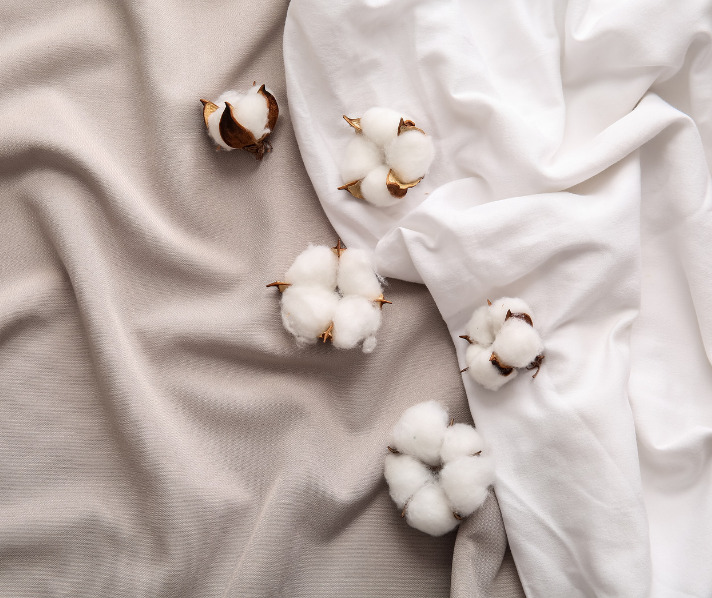
01 / Material comparison
Read fibre content before comparing feel
A 100% linen sheet is a different specification from a linen-cotton blend or a bamboo-derived blend containing some linen. Likewise, a cotton sheet may be pure cotton or include another fibre. The percentage matters if you are choosing a particular material.
Read the composition field rather than relying on the product title. Bedding described as “Linen” may simply be a beige colour within a cotton range. Words such as “bed linen” can also refer to bedding generally, without promising flax content.
For example, the Bamboo Linen Fitted Sheet Natural (Linen) lists an 80% bamboo and 20% linen blend. It should not be used as a direct example of pure linen sheets.
02 / Material comparison
Compare texture, drape and creasing
| What matters to you? | What to inspect |
|---|---|
| Surface texture | Compare a fabric sample or close-up, including any visible slubs or raised finish. |
| Crisp or fluid feel | Read the construction and assess the actual drape; cotton can be woven or knitted. |
| Appearance after washing | Decide whether you enjoy a relaxed crease or prefer a more pressed finish. |
| Weight | Compare the actual fabric rather than assuming one fibre is always lighter. |
Linen is often chosen for its textured, relaxed appearance, while cotton offers constructions including percale, sateen and jersey. These are broad starting points, not guarantees. A washed finish can change the initial feel of either fabric, and a cotton sateen sheet is a different comparison from cotton jersey.
03 / Material comparison
Assess comfort through the whole bedding setup
Do not choose purely from a promise that one fibre is always cool or suitable for every season. Fabric weight, construction, the quilt, mattress layers, room conditions and your preferences all influence the finished bed.
If you already sleep comfortably on a particular cotton sheet, identify what you want to change before switching: texture, appearance, drape or care. If possible, feel linen in person and consider starting with one useful piece. A purchase based on a clear preference is easier to assess than one based on broad material rankings.
Neither fibre label establishes allergy treatment or antibacterial performance. Treat those as separate claims that need product-specific support.
04 / Material comparison
Check the practical details side by side
Measure your mattress width, length and height with the usual topper and protector. Compare fitted dimensions and recommended depth suitability for the selected product. Check flat-sheet drape and pillowcase dimensions too, especially when mixing separately purchased pieces.
Read the care labels before buying. Check the allowed wash, drying and ironing methods, and whether they suit your machine capacity and drying space. Do not apply a linen rule to a blend or assume every cotton sheet uses the same cycle.
Compare like-for-like pack contents when considering value. One fitted sheet without pillowcases is not the same purchase as a complete set. Choose the fabric whose surface, appearance and care requirements make sense for your bed, rather than looking for an overall winner.
Materials
A fair linen and cotton comparison
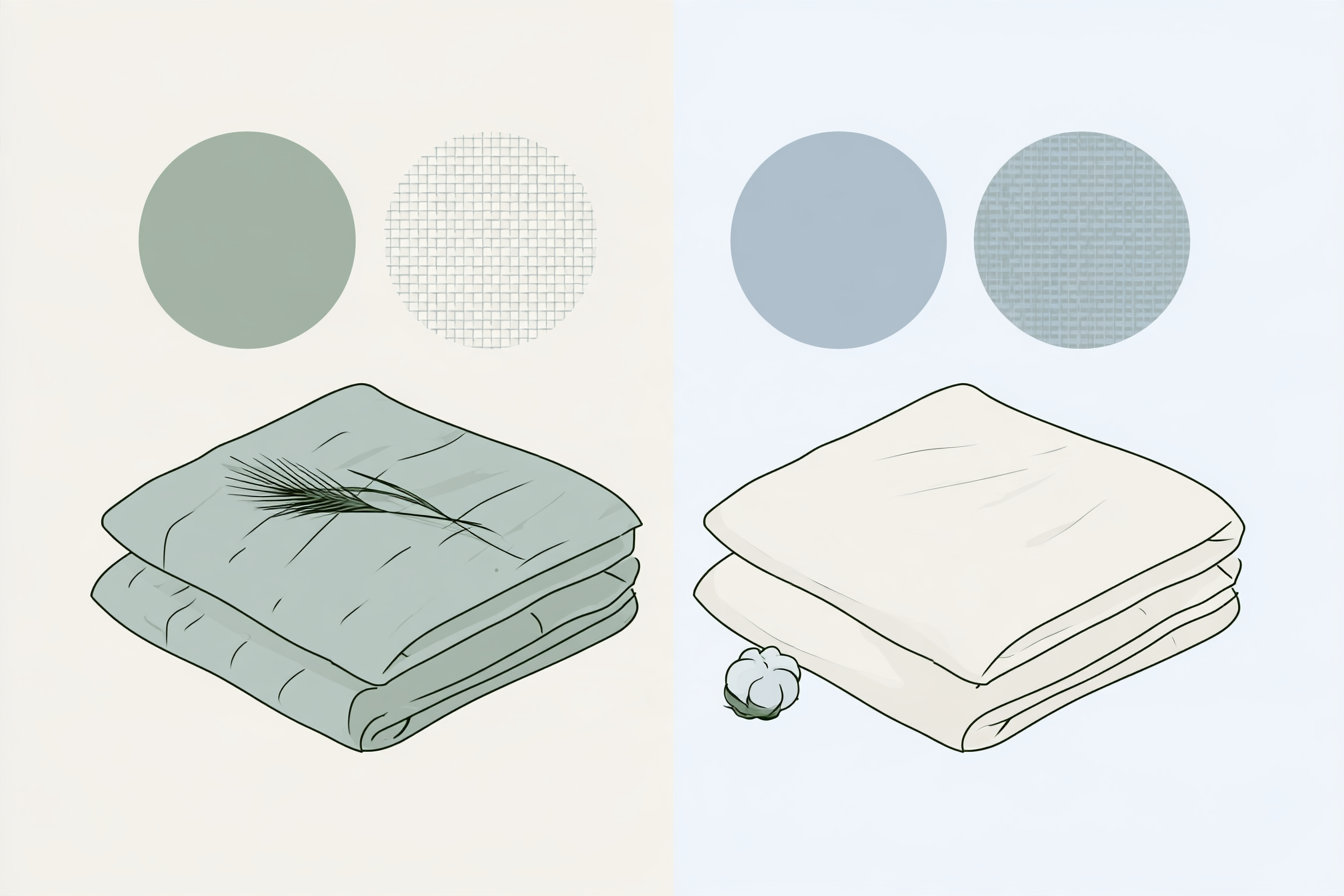
Pure fibre or blend? Read the percentages.
Compare the actual texture, weight and drape.
Match the dimensions to your mattress.
Choose instructions that suit your routine.
Compare complete sheets, not two fibre names in isolation.
Common questions
Is linen always cooler than cotton?
No universal ranking applies to every sheet. Compare the actual fabric construction and weight, then consider the rest of the bed and your room.
Does a colour called Linen mean linen fibre?
No. Read the composition label. “Linen” may describe a colour, and “bed linen” can mean bedding generally.
Can linen and cotton be used together?
Yes. Choose pieces that feel comfortable to you and check each item’s size and care instructions separately.
Are linen blends the same as pure linen?
No. A blend includes other fibres in stated percentages, which may affect feel and care. Compare its actual specification.
Compare clearly labelled fabrics
These are different specifications: cotton sateen and a bamboo/linen blend. Read the composition and selected-size details.