
Updated October 2026
The bedding edit · Sheet buying guide
Fitted and flat sheets do different jobs, so choosing between them is not always an either-or decision. Start with how you make the bed, whether you like a top sheet and which pieces are easiest for you to wash and handle.
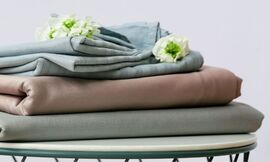
Fitted vs flat sheets
Which do you need?
A fitted bottom sheet, and an optional flat top sheet.
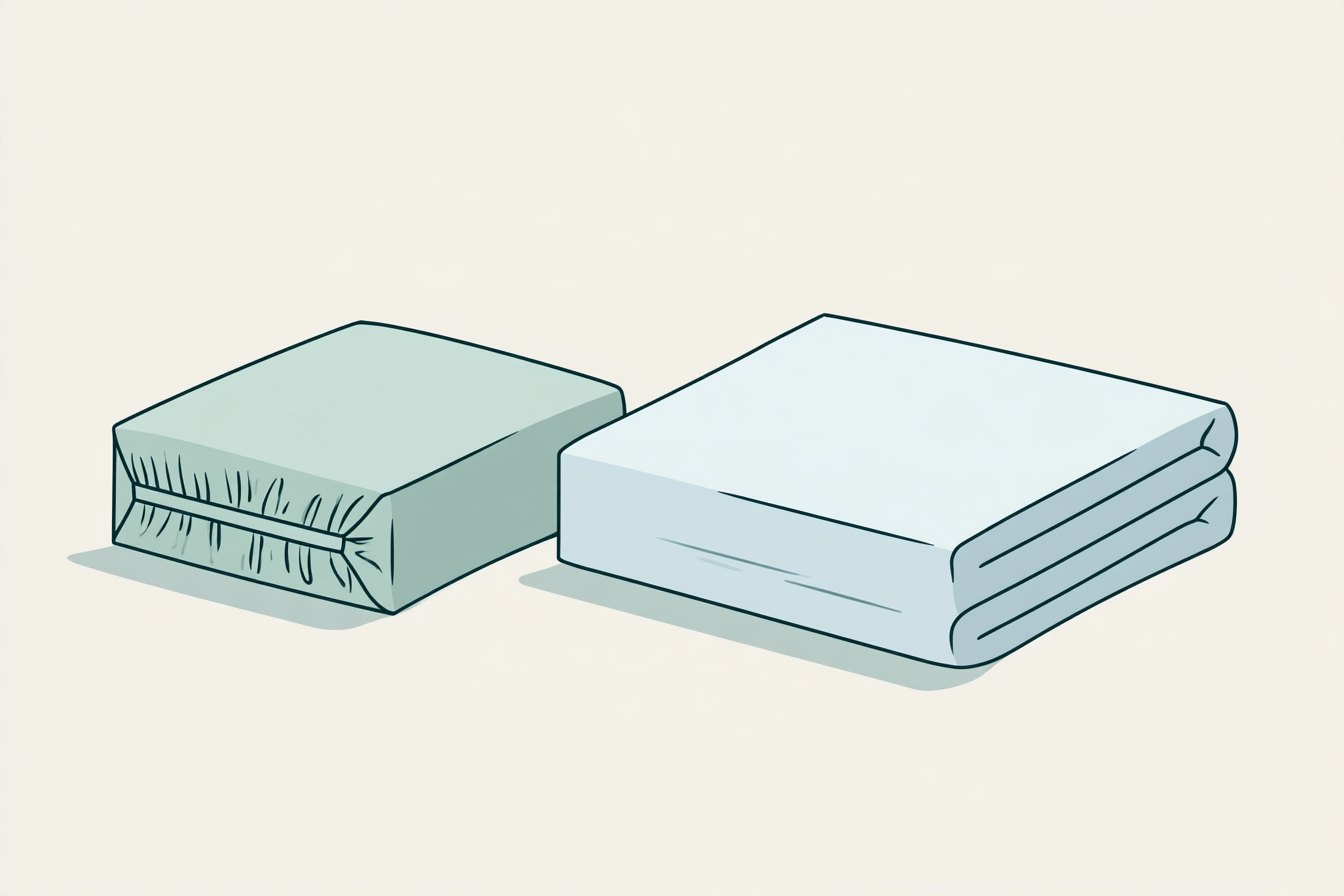
Fitted sheet
Shaped, elasticated corners fit around the mattress. Quick to put on when the size and depth are right.
Flat sheet
A rectangle used between you and the quilt. It can be tucked in if it’s large enough.
Buy what you use
If you never use a top sheet, separates may suit you better than full sets.
Measure the mattress, including its total height, before choosing.
01 / Sheet buying guide
Understand each sheet’s main role
| Feature | Fitted sheet | Flat sheet |
|---|---|---|
| Shape | Shaped corners with an elasticated edge. | A flat rectangle without fitted corners. |
| Common use | Directly over the mattress protector. | As a top sheet under other bedding. |
| Fit check | Width, length and appropriate depth. | Width and length for drape and tucking. |
| Daily handling | Pull the corners into place and smooth. | Position, fold back and tuck as preferred. |
Neither ordinary sheet should be treated as a waterproof mattress protector. If that protection matters, choose a separate product designed for the purpose and include it when measuring mattress height.
02 / Sheet buying guide
Choose for your bed-making preferences
A correctly sized fitted sheet can make the bottom layer quick to put on. Its limitations show up when the footprint or depth is wrong, the elastic is worn, or added mattress layers change the fit. It is also less straightforward to fold into a neat rectangle.
A flat top sheet gives you a separate washable layer and a turned-back edge if you like that look. Some sleepers find it twists or feels restrictive when tightly tucked; others appreciate being able to use it alone as a light covering when conditions suit.
Using a flat sheet as the bottom layer is another option if its dimensions allow enough fabric beneath the mattress. Expect more tucking and possible readjustment. It is not a universal fix for every mattress size.
03 / Sheet buying guide
Measure the right thing for each format
For a fitted sheet, measure the mattress width and length, then its total height with the usual topper and protector. Read the selected product’s dimensions and any recommended mattress-depth limit. A pocket-depth measurement does not always equal the maximum suitable mattress height.
For a flat sheet, consider the side drop, foot tuck and top fold you want. The same bed-size name can cover different flat-sheet dimensions between ranges, so compare measurements rather than relying on the label alone. If you tuck the foot firmly, check that the sheet still feels comfortable around your feet.
To solve lifting corners, retain the correct mattress footprint and compare suitable fitted depths. Moving to a larger bed width can leave loose fabric without resolving the underlying issue.
Selected customer reviews / Bedding fit
Fit makes a difference to everyday use
Customers’ comments about fitted-sheet depth can be useful beside your own measurements. These selected service reviews describe individual experiences with bedding fit; they do not establish that every sheet will suit every mattress.
04 / Sheet buying guide
Buy the pieces you will actually use
Read set contents carefully. Some purchases are one fitted sheet or one flat sheet; a styled photograph may show separately sold pillowcases. If you never use a flat top sheet, separates may be a better match for your routine than repeatedly buying complete sets.
If you use both formats, plan the laundry together while following each label. Keep enough spare bedding for drying conditions in your home. A top sheet can reduce direct contact with a cover, but it does not remove the need to wash that cover as required.
Choose fibre and surface feel after deciding the format. The fitted-versus-flat distinction describes shape and role, not whether the fabric is cotton, a blend, woven or knitted.
Sheet fit
Fitted and flat: two different jobs
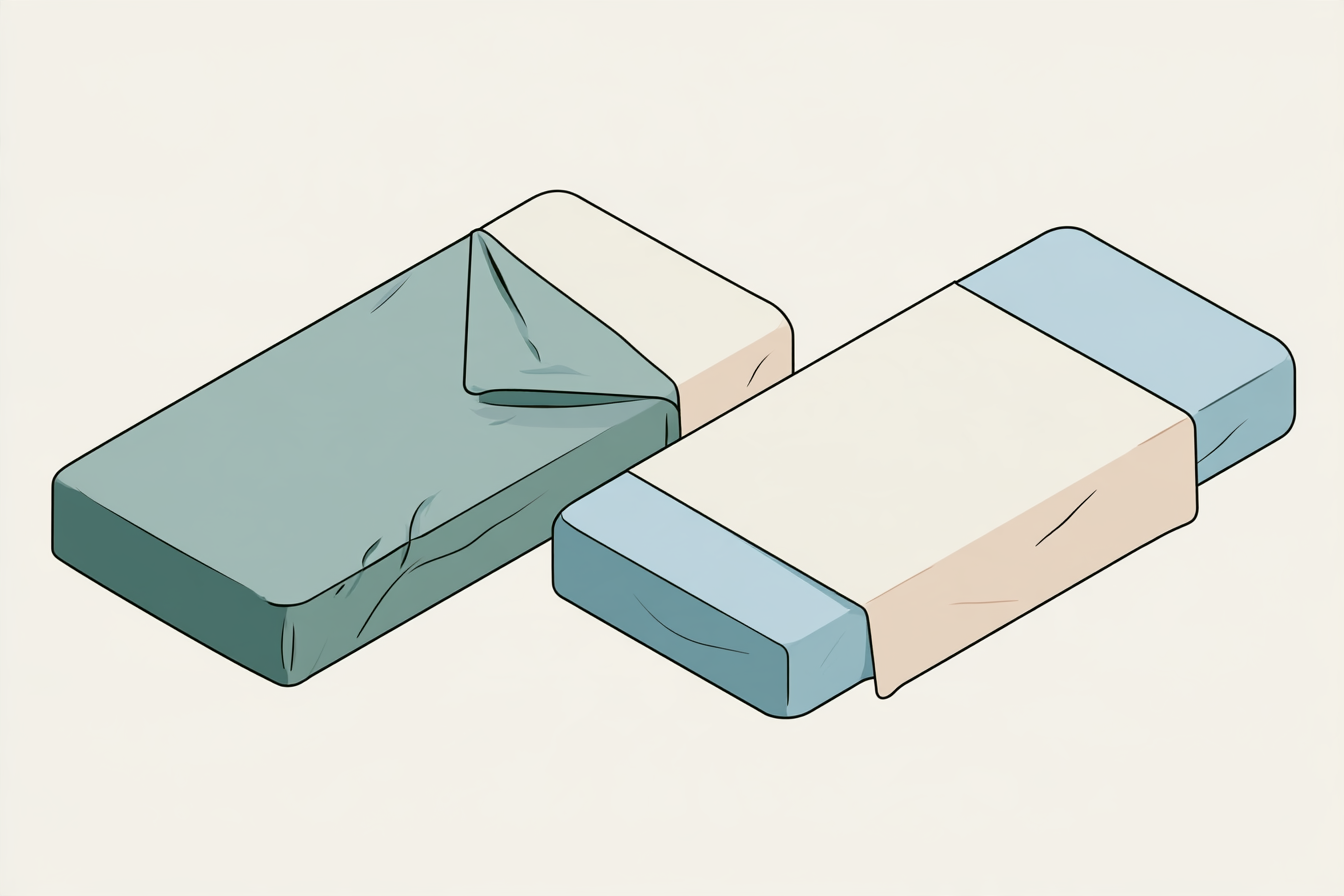
Measure mattress width, length and total height.
Allow for your preferred drape, foot tuck and top fold.
Use the pieces that suit your comfort and laundry routine.
Choose sheet format by its role, then verify the dimensions.
Common questions
Do I need a flat sheet?
It is optional for many adult bedding setups. Choose according to comfort, bed-making and laundering preferences rather than a rule that every bed must use one.
Can a flat sheet replace a fitted sheet?
It can be tucked around the mattress if it has enough width and length. Check the dimensions and expect more tucking and possible adjustment.
Why does my fitted sheet come off?
Check mattress footprint, total height, the sheet’s stated suitability and elastic condition. A deeper mattress or added topper may change what fits.
Are fitted and flat sheets made from different fabrics?
Either format can use different fibres and constructions. Compare the composition and care label of the particular product.
Shop the post
Pieces from this guide
In-stock picks to start with.

400TC 50cm Fitted Sheets Queen Bed Extra Depth
The Allura Linen Hotel 400TC cotton fitted sheet for queen beds has an extra-deep fit.
View product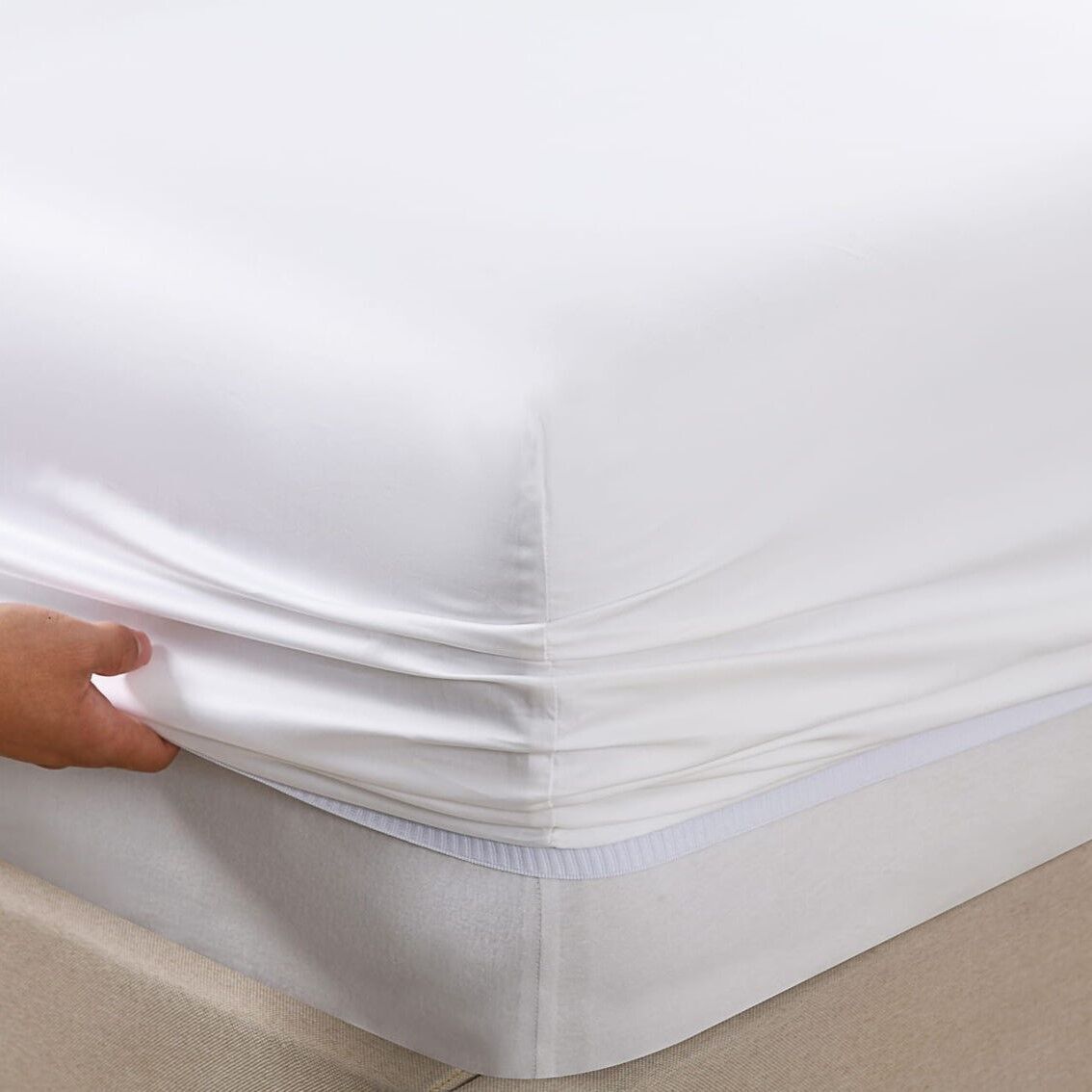
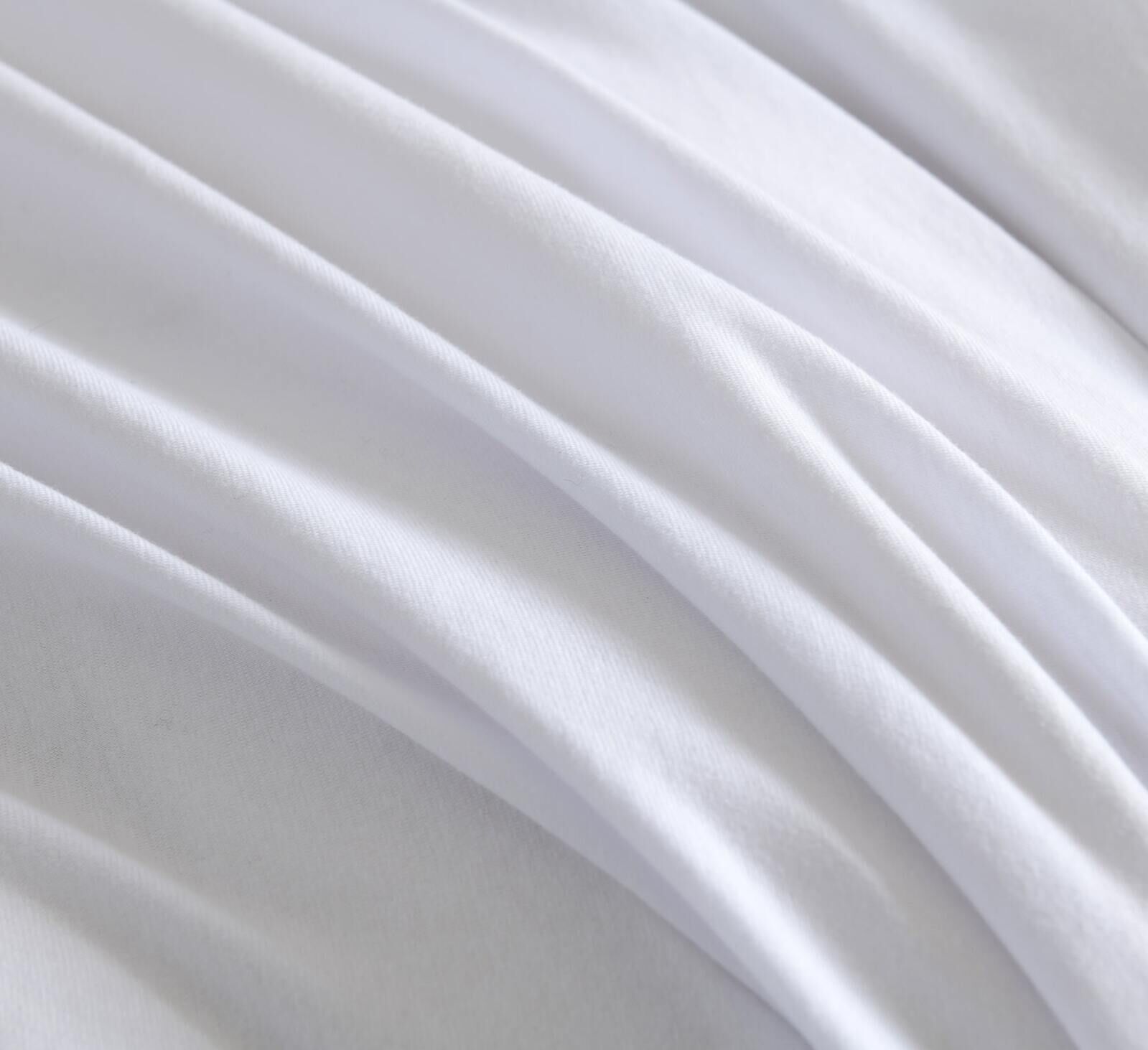
Jersey Flat Sheet White
The Jersey cotton flat sheet in white by Linen Studio is fresh and everyday.
View product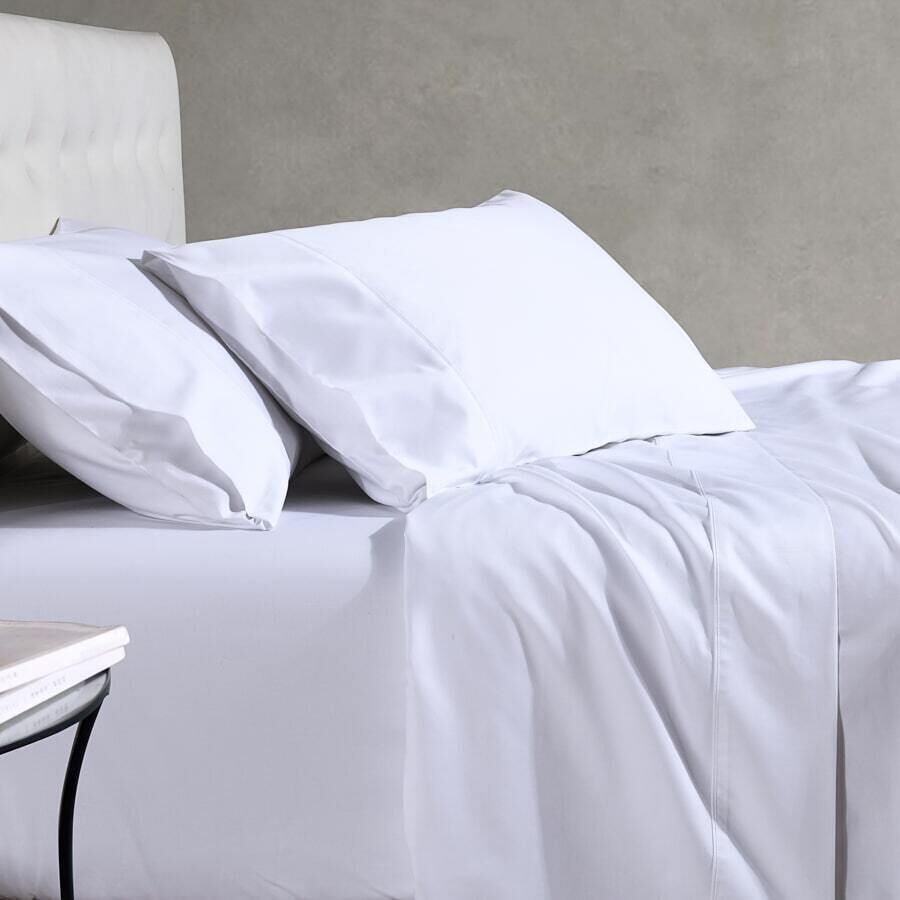
Soho 1000 Thread Count White Flat Sheet
Crisp white 1000TC long-staple cotton in a fresh, hotel-style flat sheet for any bed.
View productChoose the pieces for your setup
Compare measurements for each format and check whether the purchase is a separate or a set.