

The bedding edit · Bedroom colour
A new quilt cover cannot add daylight, but it can change the balance of light and dark surfaces in a room. In a bedroom with limited natural light, a considered bedding palette can make the bed feel clearer and less visually crowded without removing all colour.

01 / Bedroom colour
Look at what is making the room feel dark
Stand at the doorway and notice the largest surfaces: curtains, floor, bedhead, wardrobe and bedding. A dark cover may be only one part of the overall balance. If the curtains and furniture are staying, use them as the starting point rather than choosing a cover in isolation.
Clear unnecessary items from the bed and nearby surfaces before buying anything. That makes it easier to see whether the issue is colour, too many competing patterns or simply a crowded arrangement. Keep access to windows and normal room use practical.
02 / Bedroom colour
Compare white with other pale options
White provides a clear contrast with dark timber or a deep-coloured bedhead. Cream, pale grey, soft blue or a muted light green may connect more comfortably with other finishes. Check the undertone: a cool-looking white on screen can appear different beside warm tiles, timber or curtains.
Use a sheet turnback or pillowcases to bring a second light tone into the bed. You do not need an exact match, but repeat a colour deliberately so the layers look connected. Product photographs are useful for style; screen settings and lighting mean they cannot guarantee an exact colour match in your room.
03 / Bedroom colour
Keep pattern focused and texture visible
If the room already has patterned curtains or a prominent rug, try a quieter cover. Waffle, a subtle woven pattern or a restrained stripe can add detail without introducing a large new motif. In a mostly plain room, a light-ground print may work just as well as a solid colour.
Compare the pattern scale in the full-bed image and the close-up. A small detail can read as a larger block of tone from the doorway. Keep sheets and the first layer of pillows simple while you judge the cover, then add a single accent if the bed needs one.
04 / Bedroom colour
Use darker accents to give the lighter colours shape
A lighter-looking bedroom does not require every item to be pale. A charcoal border, navy cushion or timber bedside table can define the edges and stop the room feeling washed out. Use a small repeated accent rather than several unrelated dark objects on the bed.
If you prefer a dark quilt cover, surround it with quieter light sheets and reduce extra layers. You can choose a deliberately moody room without claiming it will become brighter. The aim is a balance that you enjoy in the light the room actually receives.
05 / Bedroom colour
Try the arrangement in daytime and at night
Look from the doorway and beside the bed in both lighting conditions. Check that the cover colour relates to the fixed finishes and that the bed does not feel overloaded with cushions. Move existing pieces around before adding more.
Read the care label for pale fabrics and decorative finishes. Choose a cover that fits your insert and a washing routine you can maintain; a simple, well-fitting bed often makes the colour choices easier to appreciate.
Bedroom styling
Balance light, texture and contrast
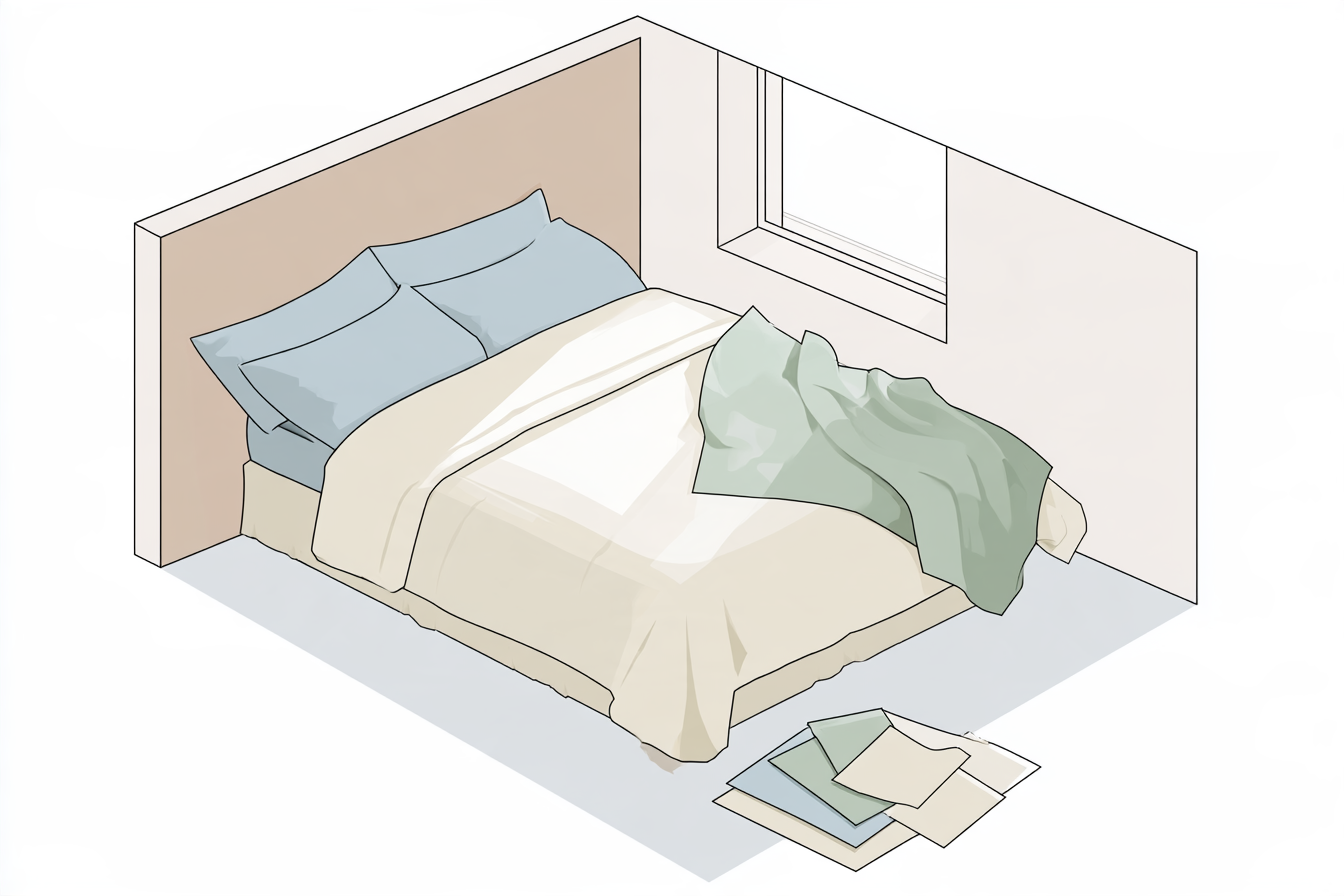
Test white or a pale tone beside the fixed finishes.
Use one weave, subtle stripe or controlled print.
Repeat a darker accent rather than adding many colours.
Check the combination by day and at night.
Bedding changes the visual balance; it does not create daylight.
Common questions
Will a white quilt cover make every room brighter?
No. It changes a large visible surface, but the room’s actual light and surrounding finishes still matter. Compare white with other pale tones in your own lighting.
Should I avoid all prints in a dark room?
No. A controlled pattern can work well. Consider its scale, background colour and relationship with curtains, rugs and other visible patterns.
Can I keep a dark bedhead?
Yes. Light bedding can contrast with it, while a small repeated dark accent connects the bedhead to the rest of the arrangement.
Compare a light base with a considered print
Check the close-up and full-bed photographs, fibre details and care before choosing a design.