
The bedding edit · Bedroom styling
Texture can make a bedroom feel finished without adding a busy print. The most useful combinations start with what you enjoy touching, then add a surface that looks good from across the room. A bed also needs to be easy to use, wash and remake.

01 / Bedroom styling
Separate the sleeping surface from the visual effect
The fabric against your skin does not need to match the outward-facing cover. A textured quilt cover may have a smoother reverse, and a top sheet can create another layer between you and the cover. Check the backing before ruling a design in or out by its face fabric.
Think about movement as well as touch. Do you prefer a sheet that feels crisp and holds its shape, a fluid smooth surface or a knitted fabric with give? Then look at the decorative layer. A glossy fabric can reflect light strongly, while a matte or raised texture creates a different kind of depth.
02 / Bedroom styling
Know what the texture names describe
| Term | What to look for |
|---|---|
| Waffle | A raised woven grid; check its scale and the reverse fabric. |
| Quilted | Stitched layers, often padded; check each material and bulk. |
| Velvet | A pile surface with a directional appearance; check fibre and care. |
| Sateen | A smoother, lustrous woven face; read the fibre content separately. |
| Jersey | A knitted surface; compare the feel and stretch with woven sheets. |
A textured name does not establish how warm a bed will be. The cover, quilt insert, mattress layers and room all contribute. Likewise, a smooth sheen does not prove a fabric is silk.
03 / Bedroom styling
Build one focal point with a controlled palette
Choose the piece that should stand out first. A chunky waffle cover can be the focal texture, with plain sheets and a smooth cushion. A floral cover may need only a simple knitted throw. If you combine several strong textures, keep their colours closely related so the room does not feel visually crowded.
Try a large texture beside a small one rather than repeating the same scale everywhere. Consider the headboard, rug and curtains too: a heavily upholstered room already has tactile detail. You may only need a subtle cover to connect those elements.
Look at the bed in everyday light. The direction of pile and the depth of a raised weave can change how a colour appears. Screen photographs are useful, but they cannot show every surface in your room.
04 / Bedroom styling
Make the look work with daily life
Read composition and care details for the face, reverse and any filling. If you rely on machine drying, confirm that it is permitted. Think about pets, jewellery and other items that could catch on a raised surface, then choose a construction suited to your household.
Match the cover dimensions to the quilt insert and check the pack contents. A complete styled photograph may use several separately sold pillowcases or cushions. Limit accessories to pieces you have room to store at night.
A useful test is to plan the bed in two states: made for the day and ready for sleep. If making that change requires moving a large pile of decorative bedding every evening, simplify the arrangement. The best texture plan should feel as manageable as it looks.
Styling
A simple bedding texture balance
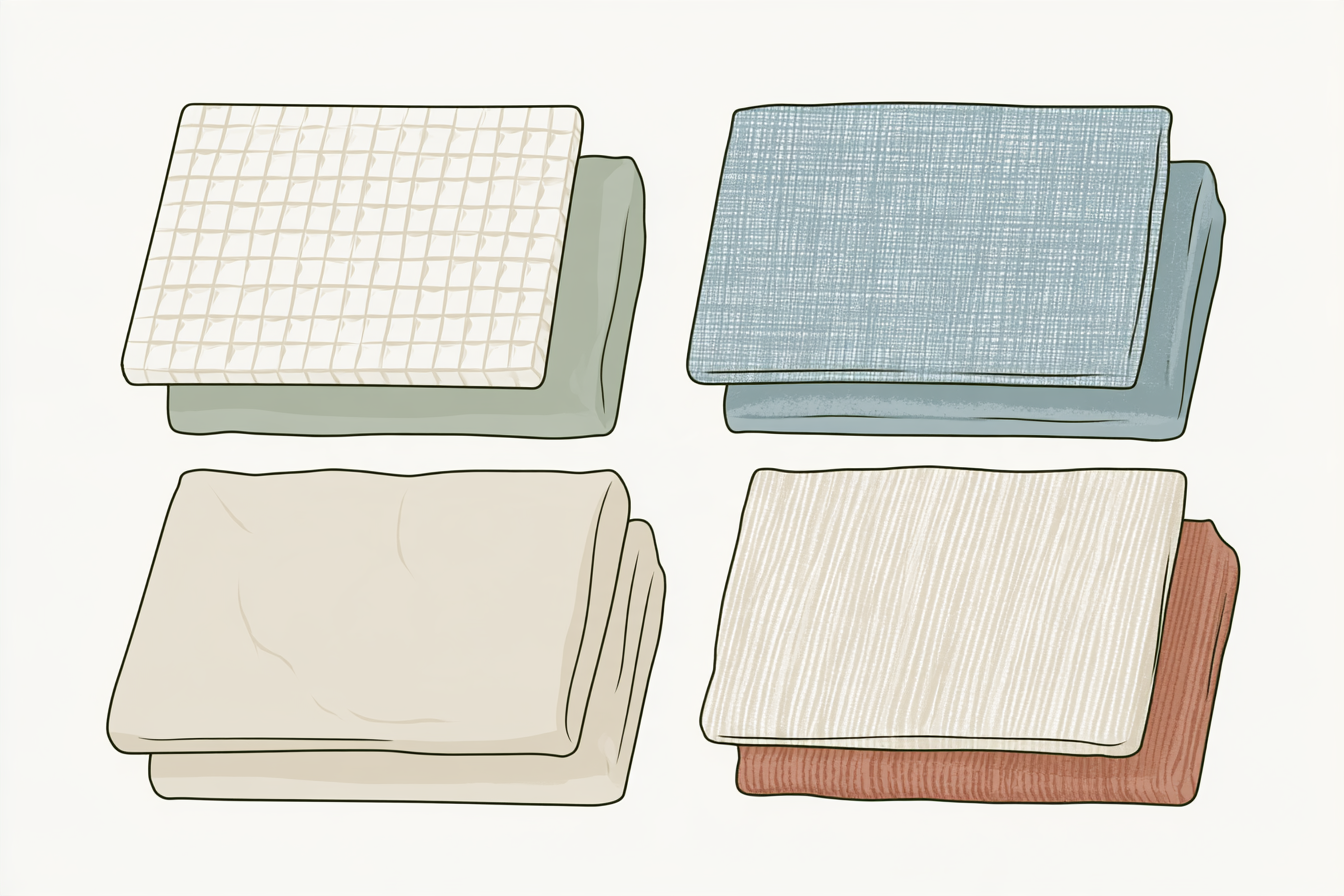
Choose the surface you enjoy sleeping on.
Let one outer piece provide the detail.
Add a restrained accent in a shared colour.
Touch, appearance and care should all work together.
Common questions
Can I mix different bedding textures?
Yes. Give one the main role, use a controlled palette and add a smaller contrasting texture where it helps.
Is velvet always made from the same fibre?
No. Read the composition. Velvet describes a surface construction, and the fibre affects the product specification and care.
Do textured covers need warmer quilts?
No. Choose the insert according to the full setup and your preferences. A texture name does not establish a warmth rating.
Should my sheets and quilt cover use the same fabric?
They do not have to. Choose the sleeping surface you enjoy, then check that the cover and its reverse suit your comfort and care routine.
Find your main texture
Compare fabric close-ups, reverse descriptions and care instructions for the selected design.