
The bedding edit · Quilt cover guide
A quilted quilt cover combines the job of a removable cover with a stitched, often padded surface. It can add visible texture without a printed pattern, but the word “quilted” does not tell you its fibre, exact warmth or what comes in the pack.

01 / Quilt cover guide
Separate the cover, the insert and the coverlet
A conventional quilt cover is a fabric envelope for a quilt or doona. A quilted cover adds a stitched layered face, commonly with padding held between fabrics. The stitching may form channels, diamonds or a decorative repeat. A textured weave alone is not necessarily quilting.
A filled quilt is the insert that normally goes inside that envelope. A coverlet or bedspread is usually a finished top layer used over the bed rather than a cover designed to enclose an insert. Names can overlap between retailers, so look for the closure, product description and stated inclusions before buying.
If you are replacing a cover, you may be able to keep your existing insert. If you are furnishing an empty bed, a quilt cover set does not automatically supply the filled quilt.
02 / Quilt cover guide
Read the layers separately
Quilted is a construction term, not a type of cotton. A cover may combine a velvet or woven face, a different reverse and an internal padding. Read each composition rather than assuming that one fibre description applies to every layer.
- Face: check texture, sheen and any details that could catch on jewellery or pet claws.
- Reverse: consider the fabric that will face your body or top sheet.
- Padding: look for its composition and any stated weight.
- Finishing: inspect seams, closure and the pattern of stitching in close-up photographs.
Think about handling too. A substantial quilted face can be bulkier to lift, wash and dry than a simple unpadded cover, even in the same nominal size.
03 / Quilt cover guide
Plan the whole bed’s warmth and fit
A padded cover can contribute to the warmth and weight of the bed. The amount depends on its construction, the quilt inside, your other layers and the room. It is not a universal winter rating. If you already sleep warm under your current quilt, adding a heavy cover may be less useful than choosing a lighter decorative surface.
Match the cover’s actual dimensions to the insert. Sizing up a cover without changing the quilt can leave empty fabric around the edges. For a fuller drape, first choose an appropriate quilt size for the bed and then a cover that matches it. Check any separate pillowcase dimensions and avoid assuming that styling accessories are included.
04 / Quilt cover guide
Choose a design that suits the laundry
Check the product’s own care label before choosing a cycle or drying method. A cover’s several materials, decorative stitching or padding can make its requirements different from your sheets. Make sure the washing machine can handle the wet item without forcing it into the drum.
After washing, check that the padded areas and seams are fully dry before remaking the bed or storing the cover. For styling, plain sheets and one contrasting texture are often enough: the quilting already provides detail. Keep the top layer easy to remove if your preferred sleeping setup is lighter than your daytime display.
Construction
What makes a quilted cover?
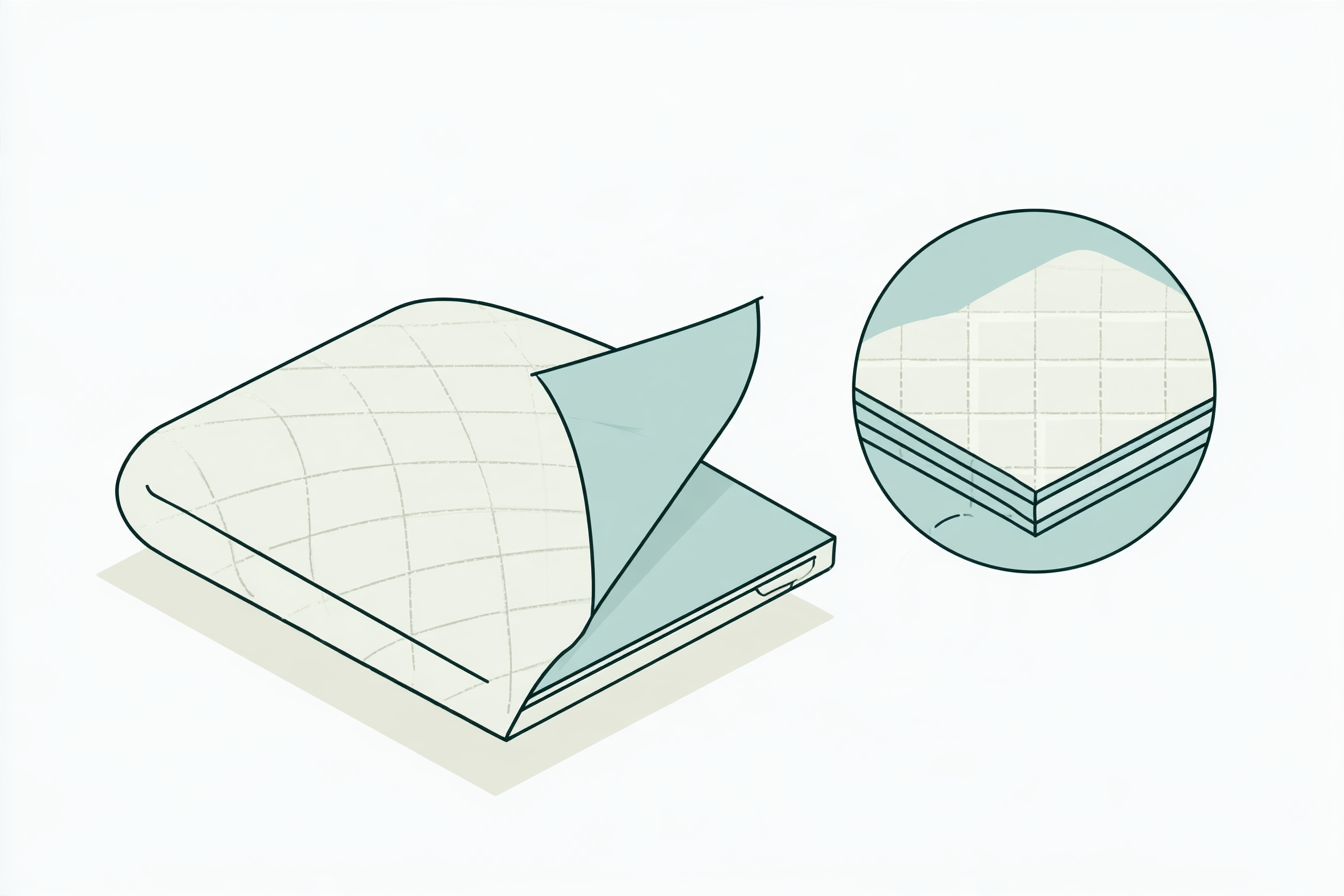
Stitching holds the cover’s layered surface together.
Check its composition separately.
A filled quilt goes inside the cover and is usually separate.
Quilted describes the cover’s construction, not its fibre or a guaranteed warmth rating.
Common questions
Does a quilted quilt cover include a quilt?
Usually the insert is separate. Read the pack contents: “quilt cover set” commonly means the cover and specified pillowcases, with other pieces sold separately.
Can I use a quilted cover without an insert?
Some people use one as a lighter top layer. Whether that works depends on the particular construction, comfort preference and product instructions; it does not convert every cover into a coverlet.
Is every quilted cover made from cotton?
No. Quilting does not specify the fibre. Check the face, reverse and filling descriptions separately.
Can I tumble dry it?
Only if its own care label permits it. Check the permitted setting and your machine capacity rather than following a general bedding rule.
Compare the construction in detail
Use the product description to check every layer and whether a filled quilt is separate.